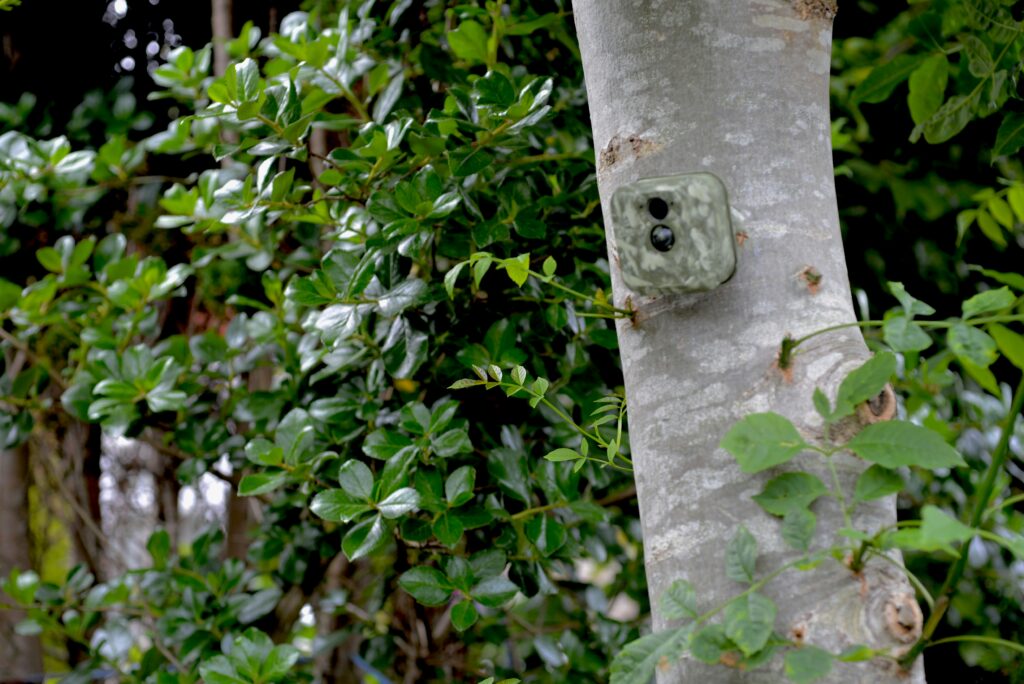
If you’re scouting deer without a trail camera in 2026, you’re leaving information on the table. A good trail camera tells you exactly which bucks are working your property, when they’re moving, and which scrapes and funnels are most active — without you ever setting foot in the woods.
The good news: you don’t need to spend $300 to get a camera that delivers. These are the best trail cameras under $100 that serious hunters are actually using.
AFFILIATE DISCLOSURE: This article contains affiliate links. If you click a link and make a purchase, we may earn a small commission at no extra cost to you. We only recommend products we genuinely believe are worth buying.
Quick Comparison: Best Trail Cameras Under $100
| Camera | Price | Best For |
|---|---|---|
| Browning Strike Force Pro | ~$89 | Best Overall |
| Stealth Cam G42NG | ~$59 | Best Budget |
| Bushnell Core S-4K | ~$99 | Best Image Quality |
| Moultrie Mobile Edge | ~$79 | Best Cellular Option |
| Wildgame Innovations Terra | ~$49 | Best for Beginners |
1. Browning Strike Force Pro — Best Overall
Price: ~$89
The Browning Strike Force Pro is the trail camera we recommend to most hunters shopping under $100. It punches well above its price with fast trigger speed, excellent night photos, and bulletproof reliability through all seasons.
Key Features:
- 0.22 second trigger speed — catches deer mid-stride without blur
- 18MP image resolution — sharp, detailed photos day and night
- 100 foot detection range
- Up to 120 days battery life on 8 AA batteries
- Invisible infrared flash — deer never know it’s there
- Time lapse mode for field and food plot monitoring
What makes the Strike Force Pro stand out at this price is the trigger speed. Cheap cameras have slow triggers — by the time they fire, the deer has walked out of frame. At 0.22 seconds, the Strike Force Pro captures the whole deer, every time.
The invisible infrared flash is another genuine advantage. Some budget cameras use a visible red glow flash that deer notice and avoid after the first few encounters. The Strike Force Pro’s black flash is completely invisible — you can run it on a scrape or water hole all season without educating deer.
Battery life is exceptional. 120 days on a single set of batteries means you can check cards once a month and never worry about missing action due to dead batteries.
Bottom line: The best all-around trail camera under $100 for deer hunters who want reliable performance without overspending.
2. Stealth Cam G42NG — Best Budget Pick
Price: ~$59
For hunters who want a dependable camera at the absolute lowest price, the Stealth Cam G42NG delivers where it counts — trigger speed, battery life, and consistent photos.
Key Features:
- 10MP camera with 0.5 second trigger speed
- No-glow infrared flash
- 90 foot detection range
- Burst mode — up to 9 photos per trigger
- Compatible with Stealth Cam Command app
The burst mode is particularly useful on heavily used trails. Rather than a single photo per trigger, the camera fires up to 9 shots in rapid succession — meaning you capture every deer in a group, not just the first one through.
What you give up at $59: The image resolution is lower than pricier cameras, and the 0.5 second trigger speed occasionally misses fast-moving deer. For food plots and open areas where deer slow down, it’s not an issue.
Bottom line: The best trail camera under $60. If budget is the primary concern, this is the one.
3. Bushnell Core S-4K — Best Image Quality
Price: ~$99
If image quality matters most to you — for identifying specific bucks or capturing sharp antler detail — the Bushnell Core S-4K produces the best photos of any camera in this price range.
Key Features:
- 30MP image resolution — exceptional detail
- 4K video capability
- No-glow infrared flash with 80 foot range
- 0.3 second trigger speed
- Dual sensor technology reduces false triggers
The 30MP resolution at this price point is remarkable. You can zoom into photos and clearly identify individual bucks by their antler characteristics — useful for inventory work and deciding which deer to target.
The dual sensor technology is a practical feature often overlooked. Standard cameras trigger on any heat and motion — blowing branches, passing clouds, temperature changes. Bushnell’s dual sensor requires both heat AND motion, dramatically reducing the number of empty photos you sort through.
Bottom line: The sharpest images under $100. Best choice for hunters focused on buck inventory and identification.
4. Moultrie Mobile Edge — Best Cellular Option
Price: ~$79 (plus cellular plan ~$10/mo)
Cellular trail cameras changed scouting forever — instead of walking in to check cards and potentially bumping deer, photos are sent directly to your phone the moment they’re taken.
The Moultrie Mobile Edge is the most affordable entry point into cellular cameras and works surprisingly well for the price.
Key Features:
- Sends photos to your phone in real time via cellular
- 16MP resolution
- Compatible with Moultrie Mobile app (free)
- 0.5 second trigger speed
- Works on AT&T network
The honest trade-off: Cellular cameras require a monthly data plan (~$10/month through Moultrie). Over a full year that’s $120 on top of the camera cost. If you’re checking cameras frequently or hunting pressured ground where every intrusion matters, the cellular plan pays for itself quickly. If you hunt a relaxed property and don’t mind checking cards, save the money and go with the Browning Strike Force Pro.
Bottom line: Best option for hunters who want real-time photo delivery and are willing to pay a small monthly fee for it.
5. Wildgame Innovations Terra — Best for Beginners
Price: ~$49
The Wildgame Innovations Terra is the trail camera we recommend to first-time buyers who want to learn trail camera scouting without a big investment.
Key Features:
- 14MP resolution
- Infrared no-glow flash
- Simple 3-button setup
- Slim, lightweight profile
- 60 foot detection range
Setup takes under 5 minutes with no technical knowledge required. The simple 3-button interface means you’re not spending time in menus — you mount the camera, set the time, and walk away.
Image quality is adequate for basic deer identification, and the no-glow flash means you won’t alert deer to its presence. It’s not the most feature-rich camera on the list, but for a first-time buyer learning the basics of scouting, it’s the right starting point.
Bottom line: The easiest trail camera to set up and use. Perfect for hunters new to trail cameras who want to keep costs minimal.
Trail Camera Placement Tips That Double Your Results
The best trail camera in the world won’t help if it’s in the wrong spot. Here’s what actually works:
Scrapes: Mock scrapes and active scrapes during pre-rut and rut are the single best locations for trail cameras. Bucks visit repeatedly and linger longer than on travel corridors.
Water holes: In dry conditions or hot early seasons, water sources concentrate deer movement like nothing else. A camera over a small water hole in September can reveal every buck on your property.
Funnels and pinch points: Natural terrain features that funnel deer movement — a gap in a fence line, a saddle between ridges, a creek crossing — produce consistent photos throughout season.
Height and angle: Mount cameras at deer chest height (about 3 feet), angled slightly downward. Cameras mounted too high produce top-down photos that make it nearly impossible to judge antler size.
Scent control: Handle cameras with rubber gloves and spray with scent eliminator before mounting. A camera that smells like humans will be avoided by mature bucks.
Our Top Pick
For most hunters, the Browning Strike Force Pro at ~$89 is the best trail camera under $100. The combination of fast trigger speed, invisible flash, and 120-day battery life covers everything a serious deer hunter needs at a price that doesn’t hurt.
If you’re hunting a property where walking in to check cards is a problem, step up to the Moultrie Mobile Edge for real-time cellular delivery.
[CHECK CURRENT PRICE — BROWNING STRIKE FORCE PRO ON AMAZON]
Frequently Asked Questions
How many trail cameras do I need? Most hunters run 1 camera per 50–100 acres as a starting point. Key locations like scrapes, water holes, and primary funnels should each have a dedicated camera during pre-rut.
Should I use photo mode or video mode? Photo mode for most applications — photos use less storage and battery. Video mode for water holes or food plots where you want to observe behavior and fully assess bucks.
How often should I check my cameras? Every 3–4 weeks during summer scouting. Once season approaches, minimize visits to avoid educating deer. Cellular cameras eliminate this problem entirely.
What SD card should I use? A Class 10 SD card, 32GB capacity. Avoid cards larger than 32GB — some cameras have compatibility issues with higher capacity cards.
Do trail cameras spook deer? No-glow infrared cameras are essentially undetectable to deer. Visible red-glow flash cameras can alert deer after repeated exposure. Always use no-glow — every camera on this list qualifies.
Last updated: 2026 | Wild Rods and Rifles